
Utility Installation Without Landscape Destruction
Trenching and Utilities in Roseburg for water line and electrical conduit installation
Utility trenching that protects existing infrastructure and minimizes property disruption requires precision equipment and knowledge of what lies underground. Douglas County's rocky subsoil and established root systems create challenges for standard trenching methods—rock requires specialized buckets or breaking equipment, and roots from mature trees can damage trenching machinery while the trenching damages the trees if not handled correctly. WGH Custom Tractor & Construction LLC uses equipment suited for rocky conditions and coordinates utility locating before excavation begins, which prevents the costly and dangerous mistakes that happen when existing utilities are struck during digging.
The trenching process involves calling for utility locates, hand-digging or using vacuum excavation near marked lines, and machine excavating where no conflicts exist. Water line trenches follow grade to maintain flow or accommodate proper bedding depth, and electrical conduit trenches meet code requirements for burial depth and separation from other utilities. Trench walls stay stable through rocky sections but may require shoring in loose or saturated soil to prevent collapse.
Schedule a property assessment to identify utility routing and potential conflicts before trenching work begins.
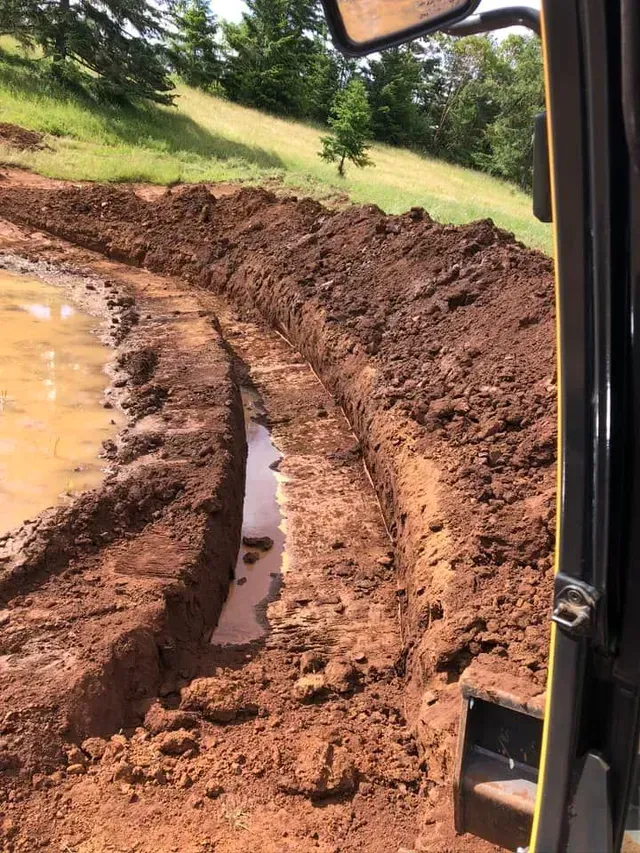
What Proper Trenching Requires
Precision trenching starts with utility locating to identify buried gas, electric, water, communication, and sewer lines. Locates mark approximate positions, and careful excavation near those marks confirms exact depth and alignment before machine work proceeds. Rocky subsoil requires excavators with higher breakout force and rock teeth that fracture material without damaging the bucket cutting edge—standard digging equipment stalls or sustains damage when forced through Douglas County's bedrock layers.
After installation is complete, you notice utility lines function correctly without leaks or electrical faults, landscaping disturbance is limited to the trench path rather than wide swaths of torn ground, and trench backfill settles uniformly without creating depressions that collect water. Trenches are backfilled in layers with compaction at each lift to prevent settling that undermines driveways or creates surface irregularities. For projects requiring electrical work beyond conduit installation, WGH Custom Tractor & Construction LLC coordinates with licensed electrical contractors to handle wiring and connection work that falls under separate licensing requirements.
Permitting and inspection coordination involves submitting trench plans for review, scheduling inspections before backfilling, and ensuring installation meets code for depth, bedding material, and separation distances. Utilities installed without permits or inspections create liability and often require expensive re-excavation when discovered during property transactions or future work.
Common Questions About This Service
Utility installation questions often focus on protecting existing systems and ensuring code-compliant work.
What happens if rocky subsoil prevents standard trenching?
Specialized rock teeth and high-powered excavators break through bedrock layers, or rock hammers fracture material when excavation alone proves insufficient. In Roseburg's geology, rocky sections are common and require equipment beyond standard residential trenching machinery to avoid project delays and equipment damage.
How are existing utilities protected during trenching?
Utility locating services mark approximate positions of buried lines, and hand digging or vacuum excavation exposes the exact location and depth before machine trenching proceeds. This step prevents the service interruptions, repair costs, and safety hazards that result from striking gas, electric, or communication lines.
Why does electrical conduit trenching require coordination with licensed contractors?
Conduit installation involves trenching and placement, which falls under excavation work, but pulling wire and making electrical connections requires a licensed electrician. Coordination ensures the conduit is sized and routed correctly for the electrical system design and that final connections meet code.
When should trenching be scheduled to minimize landscape impact?
Trenching during dry soil conditions reduces equipment rutting and allows cleaner trench walls, but utility needs often dictate timing regardless of season. Wet conditions require additional care to manage trench water and prevent soil smearing during backfill compaction.
What depth is required for water line installation?
Water lines must be buried below frost depth to prevent freezing and meet local code requirements, typically 24 to 36 inches in Southern Oregon. Depth also depends on surface loading—lines beneath driveways require deeper burial or protective casing to prevent damage from vehicle weight.
WGH Custom Tractor & Construction LLC operates with attention to detail that prevents utility strikes and coordinates permitting and inspection for compliant installations. Call (541) 580-6149 to discuss utility trenching requirements for your property project.