Earthwork That Prevents Foundation Problems
Excavation and Grading in Roseburg for properties dealing with clay soil and seasonal water issues
WGH Custom Tractor & Construction LLC handles excavation and grading across Southern Oregon with equipment and methods specifically selected for the Umpqua Valley's clay soils. During the wet season, clay becomes unworkable without the right approach, and a high water table means standard excavation techniques leave you with settling and drainage failures. You see the difference in how the site drains after grading is complete and how foundations remain stable through winter rains.
The work involves removing soil to designed depths, compacting each lift to specification, and shaping grades that direct water away from structures and toward planned drainage paths. Clay requires moisture management during excavation—too wet and it smears rather than compacts, too dry and it becomes rock-hard and resistant to shaping. Proper grading establishes positive drainage slopes and eliminates low spots where water pools against foundations or creates surface ponding.
Schedule a site evaluation to assess soil conditions and drainage requirements for your property.
How Clay Soil Excavation Differs From Standard Earthwork
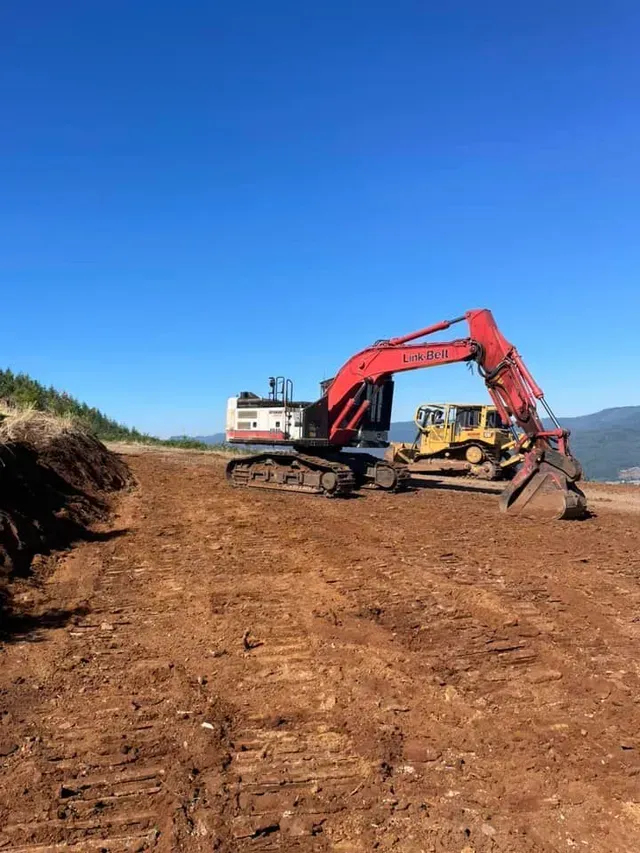
Clay soil management starts with timing the work around soil moisture content and using equipment with the ground pressure and bucket design suited for dense, cohesive material. Specialized equipment for clay includes track machines that distribute weight to prevent rutting and buckets with teeth configured to break clay layers without creating large clods that resist compaction. Each layer gets compacted at the optimum moisture content—the narrow range where clay particles bind properly without becoming overly plastic or crumbling apart.
After grading is complete, you notice water sheets across the surface during rain rather than pooling in low areas, and the ground remains firm rather than turning into a muddy basin. Driveways slope away from garage entries, yard grades direct runoff toward drainage swales or culverts, and foundation perimeters stay dry because the soil surrounding them sheds water instead of holding it. WGH Custom Tractor & Construction LLC designs drainage into the grading plan rather than treating it as an afterthought, which is how you prevent the erosion and settling that show up months after construction.
Soil stabilization involves adding rock base or amending clay with aggregate in areas subjected to vehicle traffic or heavy structural loads. In Southern Oregon's wet climate, untreated clay beneath driveways or building pads leads to rutting, heaving, and cracking as moisture content changes seasonally. The work includes removing unsuitable material, placing engineered fill, and compacting to density specifications that support the intended use without future movement.
What Property Owners Ask About Excavation Work
Questions about site preparation and grading come up frequently, particularly for properties with challenging soil or drainage concerns.
What makes clay soil excavation more difficult than other soil types?
Clay particles bond tightly when wet and resist separation, requiring higher equipment power and specific bucket designs to break material loose without smearing. The soil must be worked at controlled moisture levels to avoid creating a slick, unworkable surface that cannot be properly compacted or graded to specification.
How does grading prevent future foundation problems?
Proper grading directs surface water away from structures before it infiltrates soil surrounding foundations, which prevents hydrostatic pressure buildup and soil saturation that leads to cracking and settling. In Roseburg's wet season, clay soil holds water rather than draining naturally, making grade slopes and drainage paths critical for keeping foundations dry.
What happens during the wet season if excavation is needed?
Work gets scheduled around weather windows when soil moisture allows safe equipment operation and proper compaction, or the site receives temporary drainage measures and rock stabilization to manage water until conditions improve. Excavating saturated clay results in a slick, uncompactable mess that causes long-term settling and drainage failures.
Why does soil stabilization require rock base in some areas?
Clay soil expands when wet and shrinks when dry, creating movement that cracks pavement and destabilizes structures unless a non-reactive rock base separates the clay from the load above. Stabilization also provides a firm working surface during construction and maintains proper drainage beneath driveways and building pads.
What equipment is considered specialized for clay soil management?
Track excavators with low ground pressure prevent rutting in saturated conditions, and buckets with specific tooth spacing and cutting angles break clay efficiently without creating oversized clods. Compaction equipment must deliver the impact energy needed to densify clay at its optimum moisture content, which differs significantly from equipment used for sandy or gravelly soils.
WGH Custom Tractor & Construction LLC brings 45 years of experience working Southern Oregon's soil conditions and operates as a licensed contractor with the equipment required for clay soil projects. Request a project consultation to review grading plans and drainage design for your site.