Clearing That Preserves Timber Value
Land Clearing in Roseburg for property development in Douglas fir forest
Douglas fir country presents land clearing challenges that require balancing timber value with development needs—valuable timber worth harvesting must be separated from undergrowth and brush requiring removal, and clearing methods must prepare the land for construction without destroying marketable trees or creating slash piles that pose fire hazards. Selective clearing removes brush and unwanted vegetation while identifying timber suitable for sale, which offsets clearing costs and maximizes the financial return from property development. WGH Custom Tractor & Construction LLC handles land clearing projects from 2 to 30 acres in Roseburg and surrounding timber regions with equipment that cuts brush efficiently while protecting trees designated for harvest or retention.
The clearing process involves walking the property to mark boundaries and trees for retention, cutting and removing brush and small trees, and coordinating timber harvest with buyers if merchantable trees exist. Specialized brush cutting equipment handles dense undergrowth and saplings without damaging larger trees, and slash gets piled for removal or chipping depending on site requirements and burn regulations. Ground disturbance is minimized in areas where topsoil preservation matters for future landscaping or replanting.
Arrange a property walkthrough to evaluate timber value and clearing requirements for your development plans.
What Proper Land Clearing Accomplishes
Selective timber removal involves identifying trees by species, size, and quality to determine merchantability, then coordinating with timber buyers or mills to establish value before cutting. Douglas fir, if straight and free of significant defects, commands higher prices than hemlock or other species, and diameter and length affect whether trees qualify for sawlogs, pulp, or firewood. Clearing that treats all trees as waste misses revenue opportunities and increases disposal costs for material that could have been sold.
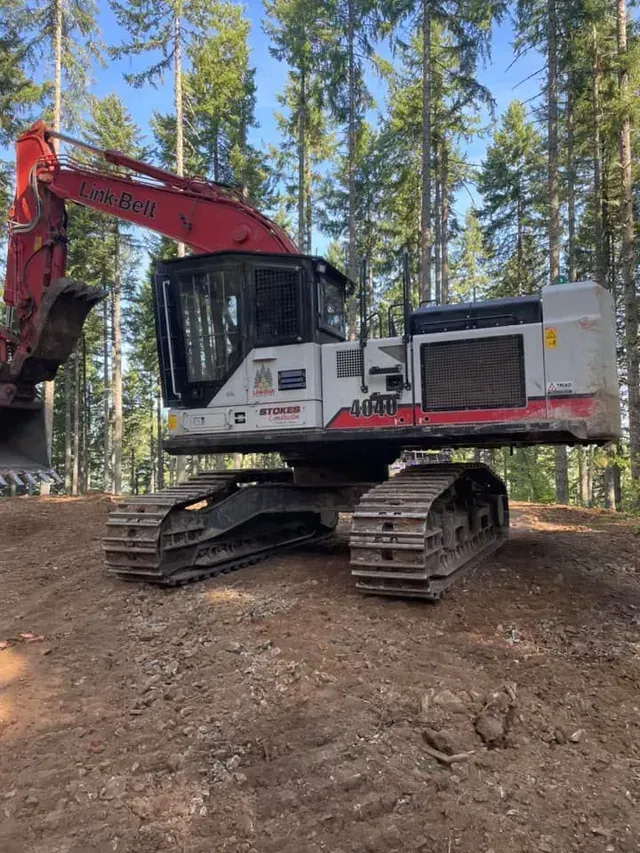
After clearing is complete, you see defined property boundaries, building sites prepared for construction access, and fire risk reduced by eliminating dense undergrowth and ladder fuels that carry ground fires into tree canopy. Slash piles are removed or chipped rather than left to dry into fire hazards, and the land transitions from overgrown forest to developable property with designated areas for structures, access roads, and landscaping. Preserved timber adds value to the property while cleared areas provide usable space without the expense and time required for total forest removal.
Brush cutting uses specialized attachments that mulch vegetation into small pieces or cutting heads that sever stems cleanly without tearing bark on nearby trees. Clean cuts heal faster and reduce disease entry points, and mulched brush decomposes in place to return organic matter to soil rather than requiring hauling and disposal. For properties with significant slash accumulation, chipping converts material into landscape mulch or biomass rather than generating disposal fees.
What Property Owners Usually Ask
Land clearing in Southern Oregon's timber country raises questions about timber value, brush management, and site preparation standards.
How do you determine which trees have timber value?
Species, diameter, height, straightness, and freedom from rot or damage determine merchantability, and current market conditions affect which grades buyers will purchase. In Roseburg's timber market, Douglas fir sawlogs command premium prices while small or defective trees may only qualify for pulp or firewood, significantly affecting revenue from selective harvest.
What size properties are suitable for clearing with your equipment?
Projects from 2 to 30 acres match the equipment capacity for efficient clearing without the overhead of large-scale forestry operations or the limitations of residential-scale machinery. Smaller parcels may not justify mobilization costs, while larger tracts benefit from industrial forestry contractors with specialized timber harvest equipment.
Why does brush cutting equipment matter for selective clearing?
Brush cutters designed for forestry work cut dense undergrowth and saplings without damaging retained trees, and they operate in uneven terrain where standard mowing equipment fails. Inappropriate equipment tears bark, compacts soil excessively, or leaves ragged cuts that invite disease and insect infestation.
When should land clearing be completed relative to construction schedules?
Clearing typically occurs before site development to allow access for survey, soil testing, and utility planning, but timing also depends on burn restrictions, nesting seasons, and weather conditions that affect equipment operation. Douglas County's summer burn bans may delay slash disposal unless material is chipped or hauled rather than burned.
How is slash managed to reduce fire risk?
Slash piles are removed from the property, chipped into mulch, or burned during permitted seasons when weather and moisture conditions allow safe ignition and complete combustion. Leaving slash to dry creates extreme fire hazards during Southern Oregon's dry summers and violates county fire safety regulations in many areas.
WGH Custom Tractor & Construction LLC operates specialized brush cutting equipment across Southern Oregon's timber properties and coordinates timber harvest to maximize property value during clearing. Contact the business at (541) 580-6149 to review clearing options that balance development needs with timber revenue for your project.