
Forests Managed Through Complete Cycles
Harvesting and Planting in Roseburg for timberland owners managing sustainable forest productivity across generations
A timber harvest that maximizes short-term revenue but ignores replanting leaves the land unproductive for decades. WGH Custom Tractor & Construction LLC provides complete forestry cycle management in Roseburg—from selective harvest that protects soil and maintains forest structure through replanting with species suited to Southern Oregon's climate and your long-term management goals. Your forest's value twenty years from now depends on the decisions made immediately after this harvest.
Sustainable forest management means coordinating harvest intensity with site capability, selecting native species that thrive in local rainfall and soil patterns, and timing replanting to give seedlings maximum establishment advantage. Douglas fir dominates commercial forestry here, but species selection depends on elevation, aspect, soil depth, and whether the goal is timber production, wildlife habitat, or mixed-use management. Replanting follows Oregon reforestation timelines, with seedling spacing and release treatments planned to minimize competition and maximize growth rates.
Schedule a consultation to discuss harvest planning and replanting strategies that align with your timeline and forest management objectives.
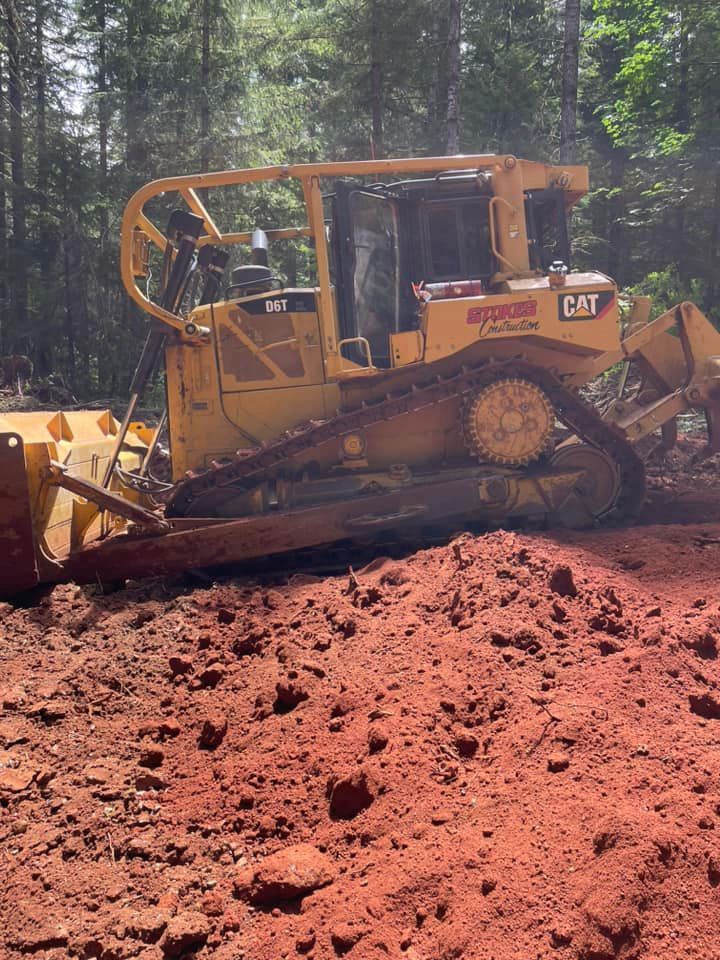
What Proper Reforestation Requires
Complete forestry services involve planning the harvest to leave conditions favorable for replanting, coordinating seedling orders to match site conditions and planting windows, and mechanically or hand-planting seedlings at spacing that balances growth rates with future management flexibility. Bare-root seedlings get planted during dormant season when soil moisture is adequate, and release treatments control competing vegetation that would otherwise overtop young trees.
After planting is complete, you'll see rows of seedlings spaced to allow canopy development without excessive competition, residual trees providing shelter without shading out regeneration, and a property on track to meet Oregon's reforestation requirements. The forest floor transitions from post-harvest slash to a recovering ecosystem where young trees establish root systems and begin the decades-long process of rebuilding timber value.
Species selection affects everything downstream—Douglas fir grows fastest on productive sites and commands premium prices, but mixed plantings with native hardwoods provide wildlife habitat and diversify revenue opportunities. Stocking density at planting determines how soon commercial thinning becomes feasible and what the future stand structure will look like at rotation age.
Questions About Complete Forestry Services
Landowners managing timberland for long-term productivity typically need information about coordinating harvest with replanting in Southern Oregon's forest environment.
What species are best suited for replanting in Roseburg?
Douglas fir thrives on most sites below 2,500 feet with adequate drainage, while western redcedar and bigleaf maple suit riparian areas, and ponderosa pine works on drier south-facing slopes—species selection depends on your site's specific conditions.
When should replanting happen after harvest?
Oregon law requires reforestation within two years of harvest, but planting during the first dormant season after summer harvest gives seedlings an establishment advantage before competing vegetation dominates the site.
How does selective harvest affect replanting success?
Retaining residual trees provides seedling shelter from temperature extremes and wind, but overstory density must be managed to allow sufficient sunlight—too much shade suppresses seedling growth while too little exposes young trees to moisture stress.
What spacing is used for replanting Douglas fir?
Common stocking rates range from 300 to 450 trees per acre depending on site productivity and management goals, with wider spacing reducing precommercial thinning needs but potentially sacrificing wood quality from slower diameter growth.
How long until replanted timber reaches merchantable size in Roseburg?
Douglas fir typically reaches commercial thinning size in 20 to 30 years and rotation age in 40 to 60 years depending on site quality, stocking density, and whether the stand receives intermediate treatments to promote diameter growth.
WGH Custom Tractor & Construction LLC approaches forestry work with decades of timber management experience in Southern Oregon, handling both the harvest and replanting to keep your land productive. Reach out to plan a forestry cycle that meets regulatory requirements while maximizing the long-term value of your timberland.