Roads Built for Logging Truck Loads
Road Construction and Repairs in Roseburg for timber access routes and commercial property entrances
Southern Oregon's timber country demands road construction that withstands logging truck traffic and resists washouts during the region's intense winter rains. Roads fail when base rock layers shift under heavy loads, when drainage systems cannot handle seasonal runoff, or when the road surface degrades from repeated truck passes over inadequate pavement structure. WGH Custom Tractor & Construction LLC builds roads in Roseburg and Douglas County designed for the weight and frequency of commercial vehicle access, not just light residential traffic.
Heavy-duty road construction begins with excavating unsuitable soil and establishing a compacted subgrade that will not pump or shift under load. A thick rock base course distributes weight across the subgrade, and proper compaction of each rock layer prevents the rutting and potholes that develop when base materials migrate under repeated heavy axle loads. Cross-slope and ditch design direct water off the road surface and away from the base layers, which is critical for maintaining structural integrity during months of rain.
Arrange an on-site review to evaluate road design requirements based on expected vehicle loads and site drainage conditions.
Why Timber Roads Require Different Construction Standards
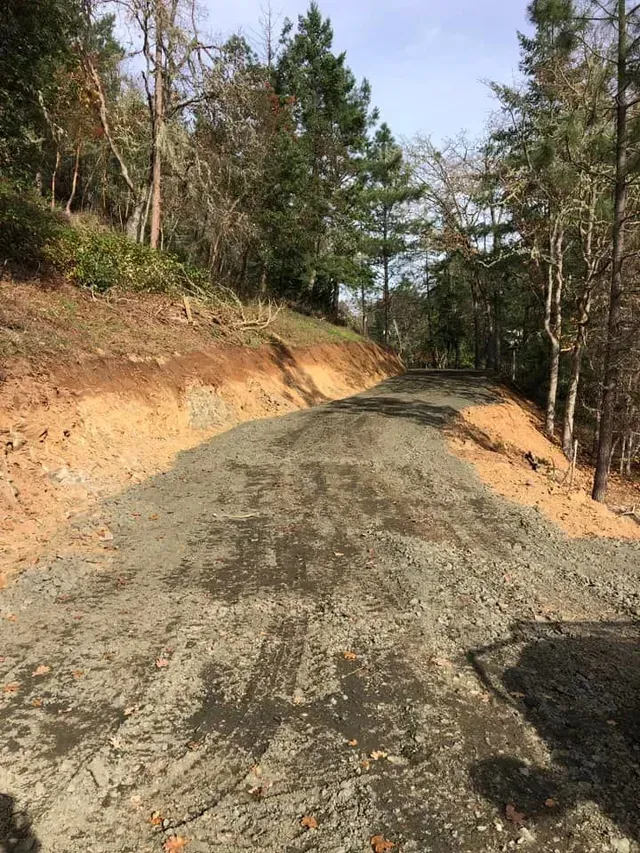
Logging trucks deliver concentrated axle loads far exceeding passenger vehicle weight, and those loads repeat frequently during active timber operations. Road base must be thick enough to spread that weight without overstressing the subgrade, and surface material must resist displacement from turning and braking forces. Inadequate base thickness leads to subgrade failure—pumping, rutting, and structural collapse that renders the road impassable during wet conditions when clay subgrades lose bearing capacity.
You notice finished roads remain firm and level under loaded truck traffic, drainage ditches and culverts handle runoff without overtopping or erosion, and the road surface stays intact through the wet season rather than deteriorating into a muddy, rutted pathway. WGH Custom Tractor & Construction LLC designs roads with the base depth, drainage capacity, and surface material suited for commercial use in Douglas County's weather conditions, where roads must function year-round without constant maintenance.
Road repairs address failures caused by inadequate original construction, drainage problems, or surface wear from extended use. Repair work involves excavating failed sections to stable subgrade, rebuilding base layers with proper compaction, and restoring drainage function through ditch cleaning or culvert replacement. Patching surface material without addressing underlying base or drainage failures results in repeated breakdowns at the same locations.
Answers to Frequent Road Construction Questions
Road projects for timber and commercial access generate specific questions about design standards and long-term durability.
What base thickness is required for logging truck access?
Base depth depends on subgrade strength and expected axle loads, but timber haul roads typically require 18 to 24 inches of compacted rock base to distribute heavy loads without overstressing clay subgrades. Thinner base sections result in rutting, pumping, and eventual structural failure under repeated logging truck traffic.
How do roads handle Southern Oregon's winter rain without washing out?
Cross-slope design sheds water off the road surface before it infiltrates base layers, and roadside ditches convey runoff to culverts or natural drainage paths without eroding the road structure. In Roseburg's wet season, roads without proper drainage quickly develop washouts, soft spots, and impassable sections as water saturates base materials and undermines the roadbed.
What causes roads to fail after a few years of use?
Most road failures trace back to insufficient base thickness, inadequate compaction, or poor drainage design that allows water to weaken subgrade and base layers. Roads built without consideration for heavy commercial loads or seasonal water conditions deteriorate rapidly under actual use.
When should road repairs be completed rather than surface patching?
Repairs are necessary when rutting, potholes, or soft spots indicate base failure rather than just surface wear. Surface patching over failed base material wastes money and leads to repeated breakdowns because the underlying structural problem remains unaddressed.
Why does rock type matter for road base construction?
Rock must be angular and well-graded to achieve proper compaction and interlock under load, and it must resist degradation from repeated traffic and weather exposure. Rounded river rock or poorly graded material shifts under load rather than forming a stable base structure.
WGH Custom Tractor & Construction LLC has built roads across Southern Oregon's challenging terrain and weather conditions for 45 years. Contact the company at (541) 580-6149 to discuss road construction designed for your commercial access requirements.